Every owner of a manufacturing or trading company will come across several types of barcodes that his company will use on its products in his career. Of these, you will probably be or use 1 or more codes on your products or during production.
Sometimes you need to familiarize yourself with the different codes that exist on the market for comparison purposes or when doing research. That’s why I’ve created an extensive list of barcodes available on the market and that the world knows about and uses. Perhaps it will make the work of a Product Manager or Product Developer easier for you.
How many barcodes are there?
There are more than 100 different types of barcodes known in the general trade around the world that the market knows about. In the following article, You will find most of them.
Is there a database of all barcodes?
Unfortunately, there is no single database of all barcodes. The most popular global database is the GS1 database, which assigns GTIN codes and defines the standards of codes subject to its standards.
Many institutions try to be the only organization that defines standards for codes such as EAN and UPC and maintains a catalog of them.
The list is divided into several parts. In the first part, you can find the most popular barcodes, used very often. In addition, we have also separated several departments or industries in which these codes occur.
Here is an extensive list of barcodes available in the market:
In addition, You can Use Barcode Generators that are related to each type of barcode. Different barcodes require different generator providers.
Popular Types of Barcodes
| Barcode Name | Usage and Characteristics | Type | Digits and Coded Data | Barcode Example |
| QR Code (Quick Response Code) | QR Code is a two-dimensional barcode that is widely used nowadays. It can store a variety of information such as URLs, contacts, text content, and more. The QR Code is easy to scan with a smartphone or scanner and has been used in marketing, advertising, transport and other fields. | Alphanumeric, two-dimensional | The number of digits Depends on the amount of data to be encoded. | 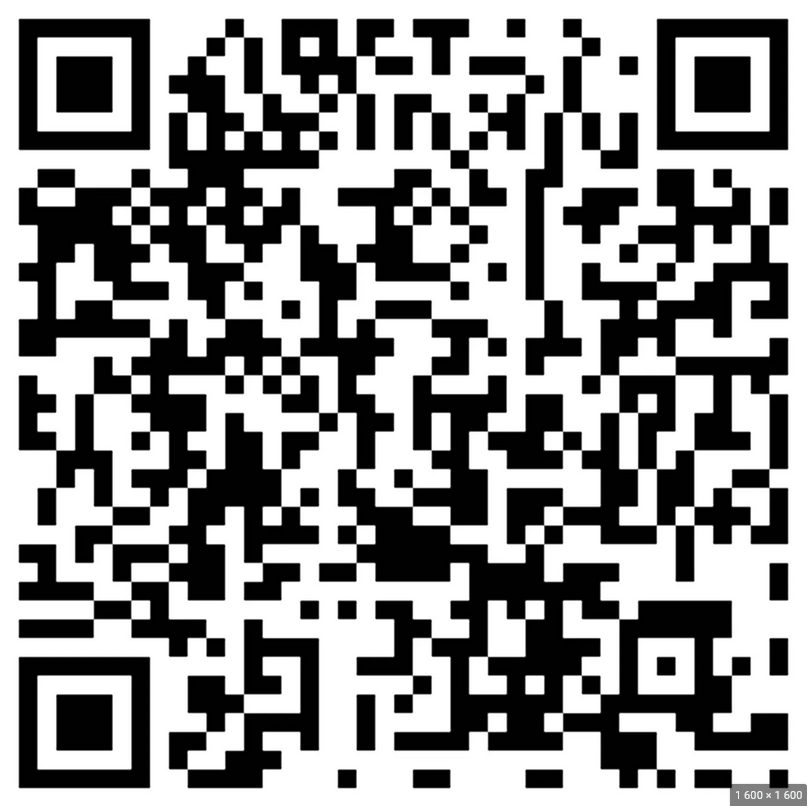 |
| UPC – Universal Product Code | Also known as UPC-A is a popular barcode in the United States and Canada. It consists of 12 digits and is mainly used in retail to identify products. UPC-A is also a one-dimensional code and allows for effective inventory tracking, warehouse management and sales. It is in GS1 standard | Numerical, 1-dimensional | Number of digits 12 |  |
| EAN-13 (European Article Number) | Is one of the most widely used barcodes in the world. It is widely used in retail especially in Europe and Asia and includes 13 digits that identify the manufacturer and the product. EAN-13 is a one-dimensional code that enables precise tracking of goods and automatic scanning at the checkout. It is in GS1 standard | One-Dimensional, Numeric, Digits (0-9) | Number of digits 13 |  |
| Code 128 | Is a versatile barcode that can encode a variety of alphanumeric characters, numbers, and symbols. It is widely used in a variety of industries including logistics, retail, and healthcare. Code 128 enables the encoding of large amounts of variable-size data and provides high read performance. | 1-dimensional, alphanumeric | There is no limit to code width. |  |
| Data Matrix | Data Matrix is a two-dimensional barcode that is used in various industries such as logistics, pharmacy, manufacturing and transportation. It can store a large amount of data, including product IDs, serial numbers, expiration dates, and other details. Data Matrix has a square or rectangular structure and is fault-tolerant. | Alphanumeric. Two-dimensional | can store up to 2,335 alphanumeric characters. |  |
| PDF417 | PDF417 is used in a variety of applications such as transport, identification cards, and inventory management. “PDF” stands for Portable Data File. It can store up to 1800 printable ASCII characters or 1100 binary characters per symbol. It is also possible to divide large amounts of data into multiple PDF417 codes that are linked together. | two-dimensional, alphanumeric | No limits |  |
| Code 39 | is one of the most popular barcodes, widely used in various industries such as retail, logistics and manufacturing. It is easy to read and can encode letters, numbers and special symbols. Code 39 is used in a variety of applications such as product identification, goods tracking and warehouse management. | Alphanumeric. | The number of characters is Usually unlimited. You can use numbers, letters, and special characters | 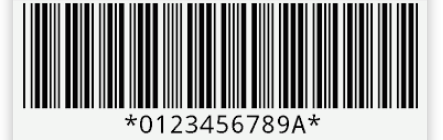 |
| Code 93 | is one of the advanced barcodes that is widely used in logistics, retail and food processing. It can encode various alphanumeric characters, numbers and symbols. Code 93 provides higher coding density and read accuracy. | one-dimensional | An unlimited number of characters allows the representation of uppercase letters, numeric digits, and a set of special characters. |  |
| MaxiCode | Due to its structure, it can be used for marking fast-moving objects. It can also be placed on curved or bent surfaces. It includes an Error Correction Mechanism. | matrix, modular, alphanumeric, two-dimensional | A number of digits is Usually unlimited. |  |
| ITF-14 (Interleaved 2 of 5) | Is one of the barcodes used to mark bulk product packaging. It consists of numbers and is used in retail and logistics. ITF-14 is a one-dimensional code that provides precise inventory tracking and efficient warehouse management. | Numeric – Digits (0-9) | Number of digits -14 |  |
Less Known 1-Dimensional Barcodes
| Barcode Name | Usage and Characteristics | Barcode Name Usage and Characteristics Type Digits and Coded Data Sample | Digits and Coded Data | Sample |
| Channel Code | Used in television systems to encode channel information. | one-dimensional | from 0 up to 7742862 numeric values, it varies on 6 separate channels |  |
| Codabar | Often used in libraries, banks, logistics, and medical services. its variants are also known as Codebar, Ames Code, NW-7, Monarch, Code 2 of 7, Rationalized Codabar, ANSI/AIM BC3-1995 or USD-4 | Alphanumeric, one-dimensional | up to 16 different numeric characters, plus an optional 4 more letter characters (generally A, B, C, and D) | 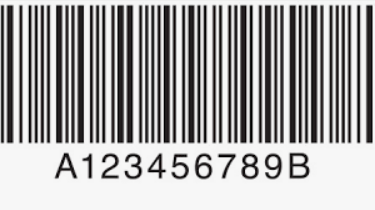 |
| Code 11 – Also known as USD-8 | Is a high-density barcode. Often used in telecommunications and transportation. | Numerical, one-dimensional | digits (0-9) and the hyphen character (-) max 31 characters | 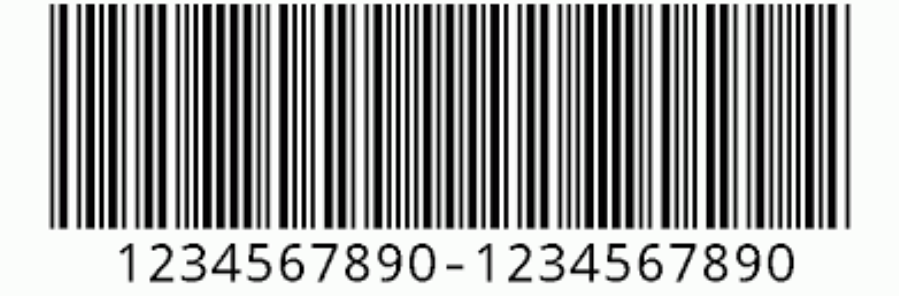 |
| Code 16 | Used in industry and logistics. | Alphanumeric, one-dimensional | 256 symbols | 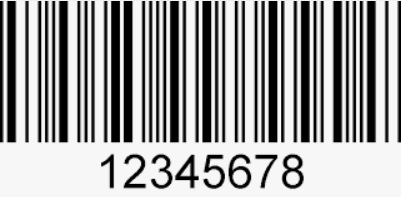 |
| Code 25 – Interleaved 2 of 5 | Product Identification, Warehouse Management, Document Management, Serial Number Tracking, Healthcare. | one-dimensional | There is no limit to code width. |  |
| Code 93 | It is often used in industries such as logistics, healthcare, and inventory management. | Alphanumeric, one-dimensional | Number of characters Usually unlimited, expands the character set to include the entire ASCII character set. | 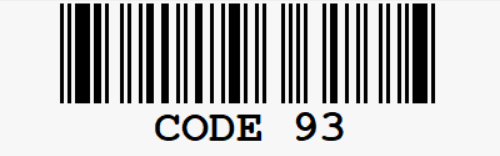 |
| Code 93 Extended | It is often used in industries such as logistics, healthcare, and inventory management. | Alphanumeric, one-dimensional | Number of characters Usually unlimited, expands the character set to include the entire ASCII character set. | 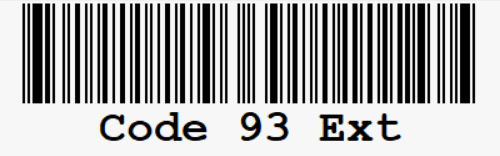 |
| Compact UPC (C-UPC) | It was developed as a more compact version of the UPC code, allowing for storing product identifiers on a smaller surface area. It is fully compatible with the UPC system and can be read using standard barcode scanners. | numeric, one-dimensional | Number of digits 6 | |
| Databar Expanded | The expanded data allows the barcode to include not just the product itself, but also its weight, expiration date, batch number, and other relevant information. It is used in retail stores to encode product information. | Alphanumeric with special signs, one-dimensional | Number of digits Depends on the type of information and format. |  |
| DataBar Expanded Stacked | Databar Expanded is split into multiple rows with a separator pattern between them. It can be read from any direction, making it an omnidirectional barcode. | Alphanumeric, with special signs, one-dimensional | Number of digits Depends on the type of information and format. |  |
| DataBar Limited | DataBar Limited is a fixed-length symbology specifically designed to encode Global Trade Item Numbers (GTINs) that start with “0” or “1”. It is utilized in scenarios where space is highly constrained, and omnidirectional scanning is not necessary. | numeric digits (0-9), one-dimensional | Is capable of encoding 4,000,000,000,000 numbers values. |  |
| Databar Omnidirectional | GS1 DataBar Omnidirectional is one of the four DataBar symbols specifically designed for retail point-of-sale applications. As the name suggests, GS1 DataBar Omnidirectional can be read from any direction. | Numeric digits, one-dimensional | 14 numeric signs |  |
| Databar Stacked Omnidirectional | It is a two-row version of the omnidirectional code, with a separator pattern between the rows. | Numeric digits, one-dimensional | 14 numeric signs |  |
| DX film edge barcode | The DX barcode is used for marking 135 and APS photographic film and film cartridges. The DX number encoded in the barcode identifies the manufacturer, film type, and the required developing process type. Automatic photo-finishing machines use this barcode to accurately process the exposed film. | One-dimensional, Alphanumeric | ANSI and I3A | |
| EAN-128 (GS1-128) | Primarily used by transportation and packaging companies, it stores data along with information about them. | One-Dimensional, Alphanumeric, Numbers (0-9) | Variable length – can encode up to 48 characters (digits or alphanumeric characters), but in practice can store different amounts of data, depending on the special tags and applications used. | 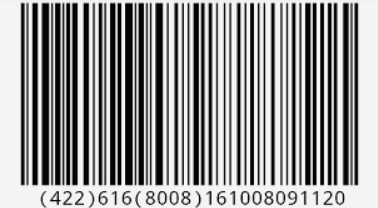 |
| EAN-14 | This is a variant of the EAN-13 code expanded with a variant digit added at the end of the code. It is used for marking bulk packaging. | One-Dimensional, Numeric, Digits (0-9) | Number of digits 14. | |
| EAN-2 | This is an add-on to EAN-13, EAN-8, and UPC. The EAN-2 add-on is often used on newspapers and magazines. | One-Dimensional, Numeric, Digits (0-9) | Number of digits 2 | |
| EAN-5 | This is an add-on to EAN-13, EAN-8, and UPC barcodes. The EAN-5 add-on is often used to represent the price of books along with the ISBN code. | One-Dimensional, Numeric, Digits (0-9) | Number of digits 5 | |
| EAN-8 | It is used for smaller products where EAN-13 is not required or where there is limited space for the full EAN. It is a shortened version of the EAN barcode. | Only numbers from (0-9) | Number of digits 8. | |
| Flattermarken | It is used for marking the correct sequence of pages in print jobs run by print shops. | Only numbers from (0-9) | system can encode numeric data up to a maximum of 90 digits | |
| GTIN (Global Trade Item Number) | This is a general term for all codes from the GS1 standard, such as EAN, UPC, GS1 Data Matrix, GS1-128, GS1 DataBar, and GS1 QR Code. | Different variations | Number of digits Depends on GTIN specification (8, 12, 13 or 14 digits). | |
| ISBN (International Standard Book Number) | It is used for the identification of books and publications. | Numeric – Digits (0-9) | The ISBN is thirteen digits long if assigned on or after 1 January 2007, and ten digits long if assigned before 2007. | |
| ISBN-13 | It is used for the identification of books and publications. | Numeric – Digits (0-9) | Number of digits 13. | |
| ISMN | The International Standard Music Number (ISMN) is used to label printed music. | Numeric – Digits (0-9) | Number of digits 13. | |
| ISSN (International Standard Serial Number) | Is used to uniquely identify a serial publication, such as a magazine. The ISSN is particularly useful in distinguishing between serials that share the same title. | Numeric – Digits (0-9) | Number of digits 8. | |
| ISSN-10 | It is used to identify periodicals and magazines. | Numeric – Digits (0-9) | Number of digits 10. | |
| ISSN-13 | It is used to identify periodicals and magazines. | Numeric – Digits (0-9) | Number of digits 13. | |
| ITF-16 | This is a variation of the ITF (Interleaved 2 of 5) barcode format that requires the user to input 15 digits. The sixteenth character is a check digit that is automatically generated. This variation also includes a bearer bar and utilizes OCR-B fonts. | Numeric – Digits (0-9) | Number of digits 16 | |
| ITF-6 | Addon to ITF-14 and ITF-16. It is widely used as an add-on to encode the quantity of items in a package or the weight of an item | Numeric – Digits (0-9) | Number of digits 6. | |
| JAN, JAN-13 (Japanese Article Number) | It is used in Japan to encode product information and identification. It is an EAN-13 barcode with the country code 45 or 46 (Japan). | Numerical. | Number of digits 13 | |
| KarTrak ACI | Sometimes KarTrak ACI (Automatic Car Identification) is a colored barcode system designed to automatically identify railcars and other rolling stock. It is no longer in use. | color coded | Only Colors | |
| MSI (Modified Plessey) | MSI (Modified Plessey) is primarily used for inventory control purposes and for marking storage containers and shelves in warehouse environments. It is a barcode symbology that allows for efficient tracking and management of inventory items. | Numerical. | Number of digits Usually unlimited. | |
| Plessey | Numerical. | Number of digits Depends on the data encoded in the barcode. | ||
| PZN (Pharmazentralnummer) | It is a variant of Code 39 Regular that is used for the distribution and production of health care and pharmaceutical products in Germany. | Numerical, one-dimensional | Number of digits 7 or 8 | |
| PZN-8 | It is a 8-digit variant of PZN Barcode that is used for the distribution and production of health care and pharmaceutical products in Germany. | Numerical. | Number of digits 8. | |
| SCC-14 (Shipping Container Code) | SCC-14 in North America and EAN-14 outside of North America. The SCC, like the UPC, is a fixed code that identifies the specific number of consumer packs of a specific product. | Numerical. | Number of digits 14. | |
| Spotify codes | It is a code that is unique to Spotify’s music streaming platform. It works in a similar way to a QR code. After scan You can quickly listen a soundtrack. | |||
| SSCC-14 (Serial Shipping Container Code) | Serial Shipping Container Code can be used by companies to identify a logistic unit, which can be any combination of trade items packaged together for storage and/ or transport purposes; for example a case, pallet or parcel. | Numerical. | Number of digits 14. | |
| SSCC-18 (Serial Shipping Container Code) | The SCC-14 and the SSCC-18 are both applied to cartons and shipping containers but they serve two different purposes. The SCC-14 is assigned to a particular product and package quantity. All identical products in the same package quantity are assigned the same number. The SSCC-18, on the other hand, is different for each carton and shipping container, regardless of its contents. The SSCC-18 can be applied in addition to the SCC-14 or, if the customer allows it, instead of the SCC-14. The SSCC-18 is especially useful for tracking cartons containing custom quantities of mixed products. | Numerical. | Number of digits 18. | |
| Telepen | Designed to express all 128 ASCII characters without using shift characters for code switching, and using only two different widths for bars and spaces. Unlike most linear barcodes, Telepen does not define independent encodings for each character, but instead operates on a stream of bits. | Alphanumeric. | Number of digits Usually unlimited. | |
| UPC-2 | is a 2-digit addon to the UPC used for the edition of a magazine or periodical. | Numerical. | Number of digits 2 | |
| UPC-5 | is a 5-digit addon to the UPC used for suggested retail price for books. | Numerical. | Number of digits 5 | |
| UPC-A | The best-known version of the UPC code, 12 digits, is used on consumer products in North America | Numerical. | Number of digits 12. | |
| UPC-C | is a 12-digit code with a product code and a check digit; not in common use. | Numerical. | Number of digits 12. | |
| UPC-D | is a variable length code (12 digits or more) with the 12th digit being the check digit. These versions are not in common use. | Numerical. | number of digits 12 or more | |
| UPC-E | It is a 6-digit code to allow the use of UPC barcodes on smaller packages, where a full 12-digit barcode may not fit, | Numerical. | Number of digits 6 |
Lesser Known 2-Dimensional Barcodes
| Barcode Name | Usage and Characteristics | Type | Digits and Coded Data | Sample |
| AZTEC | Used in various industries, including transportation, logistics, and marketing. The code exists in two variants: compact and full. | Two-dimensional. | Compact 13 decimal digits or 12 alphanumeric symbols, Full up to 3832 decimal digits or 3067 alphanumeric symbols | |
| Code 49 | It consists of square modules (elements) arranged in a grid. Used in industry and logistics, especially in inventory tracking and management. It is applied where there is a need to encode a larger amount of information. | Alphanumeric, 2D | Number of characters Usually unlimited. | |
| DotCode | DotCode is a barcode symbology that consists of dots arranged in a defined rectangular pattern. It can be printed either in black on a white background or in white on a black background. DotCode is commonly used with high-speed printers due to its less stringent printing requirements, allowing for faster production. | Two-dimensional. Alphanumeric | There is no maximum capacity | |
| DotCode A | It is a variation of the DotCode barcode that uses rectangles instead of dots. | Two-dimensional. Alphanumeric | in 6×6 to 12×12 arrays consists of 1048576 to 1.4*10^14 combinations | |
| Grid Matrix Code | It is a 2D barcode that consists of a square containing a matrix of smaller squares, with each smaller square being a matrix of even smaller squares that can be dark or light. This barcode was specifically designed to encode Chinese characters. | Two-dimensional. | Number of digits Depends on code size and amount of data to be encoded. | |
| Han Xin Code | It is used in China to encode logistic information such as addresses and shipment numbers. | Two-dimensional. | Can encode up to 2,174 common Chinese characters, 3,261 binary bytes, 4,350 ASCII characters, or 7,827 numeric characters. | |
| Micro QR Code | Used on smaller surfaces, such as product labels. | Alphanumeric, two-dimensional | Number of digits Depends on the amount of data to be encoded. | |
| QR Code Model 2 | QR Code created by improving Model 1 so that this code can be read smoothly even if it is distorted in some way. Widely used in marketing, advertising, mobile payments and information storage. | Alphanumeric, two-dimensional | Number of digits Depends on the amount of data to be encoded. | |
| Ultracode | Designed to smartphone scanning. More efficient than QR code. The Ultracode symbology is a colour, 2D matrix-style barcode symbology that can encode full 256 character extended-ASCII. It supports six error correction levels. | Two-dimensional. | Without limits |
Health Care and Pharmaceutical Symbologies Barcodes
| Barcode Name | Usage and Characteristics | Type | Digits and Coded Data | Sample |
| Code 32 (PHARMACODE) | Code 32, also known as Italian PHARMACODE, is used to identify pharmaceutical products in Italy. | 1-dimensional | numeric digits (0-9), all uppercase letters except for A, E, I, and O | 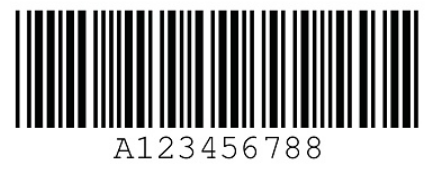 |
| HIBC (Health Industry Barcode) | Used in the medical industry to identify products, samples and patients. Is monitored by the Health Industry Business Communications Council. It is in HIBC Standard | Alphanumeric | Number of digits Usually unlimited. | 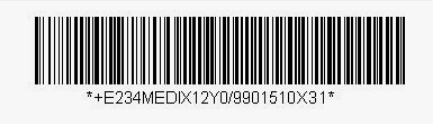 |
| LIC (Labeler Identification Code) | The assigned LIC identifies the registered company, not an individual product or device. Licensed Identification Code (LIC) is a type of barcode used for product identification and tracking. LICs are commonly used in industries where strict regulation and control over products are required, such as pharmaceuticals, medical devices. It is in HIBC Standard | 2-dimensional | Number of digits Depends on the amount of data to be encoded. | 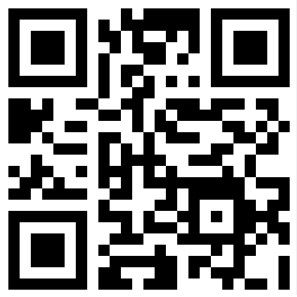 |
| Pharmacode (Laetus Pharmacode) | Used in the pharmaceutical industry to mark drug packaging and track product information. It is designed to be readable despite printing errors. It is in Pharmacode Standard | Numerical, one-dimensional | The number of digits is Usually unlimited. |  |
| Pharmacode One-Track | Used in pharmacy to mark drug packaging. It is in Pharmacode Standard | Numerical, one-dimensional | Can encode a number from 3 (two bars) to 131070 (sixteen bars) inclusive |  |
| Pharmacode Two-Track | Used in the pharmaceutical industry to mark drug packaging. It is typically used for in-house inventory control and security verification, ensuring that packaging materials and contents match and are correct. It is not used for point-of-sale purchases. It is in Pharmacode Standard | Numerical, one-dimensional | Number of digits Usually unlimited. |  |
| UDI | All Medical Devices sold in the US, EU and China must carry a Unique Device Identification (UDI) barcode. UDI barcodes are the global standard introduced by Governments to protect patients worldwide. Every UDI code is linked to a public UDI database based on a specific jurisdiction. It can be in ICCBB, HIBCC, GS1 Standards | Numeric/Alphanumeric | Number of digits Depends on the data encoded in the barcode. |  |
| UPC-B | is a 12-digit version of UPC with no check digit, developed for the National Drug Code (NDC) and National Health Related Items Code. It is not in common use. | Numerical | 12-digit number. | No Data |
| UPN (Universal Product Number) | It is a product identifier that is used in the health business to uniquely identify medical products. It is in HIBC Standard | Numeric | 12-digit number |  |
| Code 16K | Commonly used in the health care industry. | Alphanumeric, 2-dimensional | up to 8,025 ASCII characters or 16,050 numeric characters to be encoded |  |
Postal Barcodes
| Barcode Name | Usage and Characteristics | Type | Digits and Coded Data | Sample |
| Australia Post barcode | The Australian Post 4 State barcode is a 4-state barcode. It is used by Australia Post for faster automatic processing of bulk mail. | 1-dimensional | All numeric digits (0-9) All uppercase letters (A-Z) All lowercase letters (a-z) Number sign (#) Space character |  |
| CPC Binary | Canada Post’s proprietary symbology used in its automated mail sortation operations. | no data | no data |  |
| Identcode (Deutsche Post Identcode) | Used by Deutsche Post to mark parcels. | numbers only (0-9), 1-dimensional | Number of digits 12. |  |
| Intelligent Mail Barcode (IMB) | Used in the United States postal system to encode information about shipments. | Alphanumeric, 1-dimensional | Number of digits Depends on the data encoded in the barcode |  |
| Japan Post barcode | Japanese Post was created for the Japanese postal system for the sake of encoding mail addresses and faster automatic processing. | All numeric digits (0-9), All uppercase letters (A-Z), Hyphen (-) | 7-digit postal code plus an optional address data of up to 13 alphanumeric characters. |  |
| PLANET Code | Used by the United States Postal Service to track parcels. | numeric digits (0-9) | Number of digits Typically 12. |  |
| PostBar (CPC 4-State) | Used by Canada Post in its automated mail sorting and delivery operations. It is similar to other 4 State barcode systems used by Australia Post and the United Kingdom’s Royal Mail (from which it derives), but uses an obscured structure and encoding system unique to Canada Post. | Alphanumeric | Varies in length depending on the information encoded |  |
| POSTNET (Postal Numeric Encoding Technique) | It is a barcode symbology used by the United States Postal Service to assist in directing mail. | numeric digits (0-9) | from 5 to 12 digits |  |
| RM4SCC (Royal Mail) Barcode | Used by Royal Mail in the UK to encode information about parcels. | Alphanumeric, 1-dimensional | The number of digits Depends on the data encoded in the barcode |  |
| RM Mailmark C | Used by Royal Mail in the UK to encode information about parcels. | Alphanumeric, 1-dimensional | unlimited |  |
| RM Mailmark L | Used by Royal Mail in the UK to encode information about parcels. | Alphanumeric, 1-dimensional | unlimited |  |
| Royal TPG Post KIX | Used by the Dutch Post to identify parcels. | numeric digits (0-9), 1-dimensional | Number of digits: 12 |  |
| USPS Intelligent Mail | Used by the United States Postal Service to track parcels. | Alphanumeric, 1-dimensional | Number of digits Depends on the amount of data to be encoded |  |
| USPS Intelligent Mail Package Barcode (IMpb) | Used by the United States Postal Service to track parcels and postal services. | Alphanumeric, 1-dimensional | Number of digits Depends on the data encoded in the barcode | 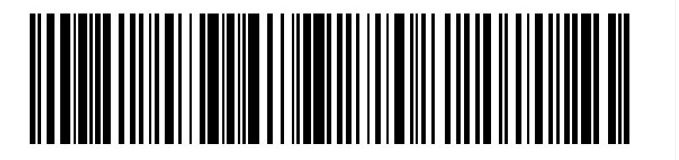 |
.