
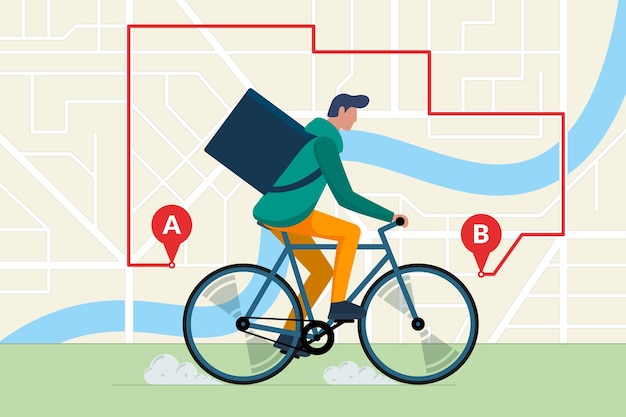
Are you tired of wasting time and money on inefficient delivery routes?
In an age where every second counts, a delivery route planner app isn’t just a convenience—it’s a game-changer.
These apps, like Route4Me and Circuit, transform complicated logistics into streamlined operations, saving businesses both time and resources. According to a study by the Logistics Management Association, companies that use route optimization tools can reduce their fuel consumption by up to 30%, which directly impacts operational costs.
In this article, we’ll explore the top delivery route planner apps, their essential features, and how they can revolutionize your delivery efficiency while maximizing your savings.
Best Delivery Route Planner Apps Overview
Delivery route planner apps have become essential tools for drivers and logistics managers aiming to enhance efficiency and save time in their operations. These applications streamline the planning process, allowing users to manage multiple stops easily and optimize routes based on real-time traffic and weather conditions.
Route4Me stands out as one of the best delivery route planner apps, known for its comprehensive features that support various address entry methods, route editing, and GPS navigation. It excels in its ability to optimize routes for up to 200 stops, significantly reducing travel time and fuel costs for delivery drivers. In fact, businesses utilizing such technologies can achieve a 20% increase in delivery efficiency, as reported by the International Journal of Logistics Management.
Circuit is another top-rated option, particularly appreciated for its user-friendly interface and features like package tracking and route copying. Its emphasis on simplicity makes it accessible for new users, while its ability to locate parcels quickly enhances the delivery experience.
MyWay offers flexibility in adding and managing stops, allowing drivers to upload addresses via spreadsheets. This feature is particularly useful for those handling a large volume of deliveries, as it reduces manual data entry and streamlines the planning process. However, it has some constraints in route optimization, which can affect daily efficiency.
These apps typically integrate with popular navigation tools like Google Maps and Waze, providing drivers with turn-by-turn directions and updates on traffic conditions. Users can expect subscription costs ranging from $10 to $20 per month, with free versions available, albeit with limited functionality.
Overall, these delivery route planner apps represent a crucial investment for drivers and logistics teams. Their capabilities in route optimization, time-saving, and ease of use contribute significantly to operational efficiency, making them invaluable in the competitive landscape of delivery services.
Key Features of Delivery Route Planner Apps
Essential functionalities in delivery route planner apps can significantly enhance efficiency for small business owners and drivers.
Route Optimization
This feature enables users to find the most efficient routes, minimizing travel time and fuel costs. By calculating the fastest paths, these apps ensure deliveries are completed swiftly.
Real-Time Traffic Updates
Real-time traffic data is crucial for timely deliveries. By integrating live traffic information, delivery route planner apps help drivers avoid congested areas and delays, leading to better route management.
User-Friendly Interfaces
An intuitive interface is key for ease of navigation, allowing users to input stops and make adjustments effortlessly. This reduces training time and increases adoption among drivers.
Integration with Navigation Tools
Most apps provide seamless integration with popular navigation systems like Google Maps or Waze. This allows drivers to receive turn-by-turn directions automatically, streamlining the delivery process.
Additional Features
- Multiple Stop Management: Adding and editing multiple stops with ease is vital for optimizing delivery routes.
- Delivery Tracking: Offering features to track delivery statuses adds transparency for both drivers and customers.
- Proof of Delivery: Features such as photo capture or electronic signatures help validate successful deliveries, useful for businesses in maintaining records.
These features collectively contribute to efficient delivery routing, making delivery operations more manageable and cost-effective for small business owners and drivers.
Pricing Comparison of Delivery Route Planner Apps
When selecting a delivery route planner app, understanding the pricing structures is crucial for making an informed decision.
Free Options
Many delivery route planner apps offer free versions with limited features. These apps primarily serve as a basic solution for users who need to manage only a handful of deliveries:
- Google Maps: The most widely used free route planner allows users to map out a route with up to 10 stops, though advanced features like dynamic routing are lacking.
- Circuit: Offers a free plan, suitable for drivers making under 10 deliveries. However, features such as live tracking and advanced scheduling are restricted to paid tiers.
Paid Plans
For users with more extensive delivery needs, several apps provide subscription-based models with varying pricing tiers. Here’s how a few popular paid options compare:
| App | Price Range | Main Features |
|---|---|---|
| Route4Me | $10 – $50/month | Unlimited stops, route optimization, delivery tracking |
| MyWay | $15 – $25/month | Flexible stop additions, delivery management tools |
| Circuit | $10/month | Package tracking, route sharing, multi-stop planning |
| RoadWarrior | $5 – $10/month | Distance optimization, basic delivery tracking |
| Zeo Route Planner | $20/month | Vehicle loading tracking, spreadsheet uploads |
| Upper Route Planner | $25/month | Route optimization, proof of delivery features |
Value for Money
User experiences vary regarding value for money. While some drivers appreciate the extensive features offered by apps like Route4Me for tracking delivery progress, others find that simpler solutions meet their needs at a lower cost.
Small businesses often lean toward free or less costly options initially, but as delivery demands grow, investing in a premium delivery management app can significantly enhance overall efficiency and profitability. According to a report by the American Transportation Research Institute, investing in route optimization software can lead to a 15% reduction in operational costs.
Ultimately, comparing the features and pricing of these delivery route planner apps can help users choose the best fit for their budget and operational requirements.
User Reviews and Testimonials of Delivery Route Planner Apps
Feedback from users of delivery route planner apps highlights several common themes around usability, effectiveness, and customer service.
Many drivers appreciate the intuitive interfaces of apps like Route4Me and Circuit. Users frequently report that these applications simplify the process of mapping out multiple stops, allowing for efficient routing without excessive manual input.
For instance, one user remarked on Route4Me’s ability to handle complex routes seamlessly, stating that it saves them significant time daily. Their feedback noted the convenience of integrating Google Maps for navigation, which further enhances the overall user experience.
However, some reviews bring attention to issues with speed and performance. Circuit users have expressed frustration during areas of poor connectivity, where the app struggles to maintain functionality. Despite this drawback, its Package Finder feature remains a favorite among many, as it facilitates locating items in their delivery vehicle.
Customer service experiences vary among apps. While some users of MyWay commend responsive support, others have reported delays in addressing concerns, which can hinder operational efficiency.
Reviews on affordability also play a crucial role. Many users find value in the pricing tiers offered by these apps, highlighting that their features justify the monthly subscription costs. However, some express disappointment with the limitations of free versions, often feeling they miss essential functionalities.
Overall, user feedback provides valuable insights into the strengths and weaknesses of these delivery route planner apps, assisting potential users in making informed choices tailored to their needs.
Free Delivery Route Planner Apps for Small Businesses
Several free delivery route planner apps can significantly assist small businesses in optimizing their delivery processes without incurring costs. Here are some of the best options available:
- Google Maps
- Offers multi-stop route planning.
- Allows up to 10 stops; users must manually adjust for the best route.
- Known for its accuracy and ease of use with turn-by-turn navigation.
- Waze
- Primarily a navigation app, excellent for real-time traffic updates.
- Community-driven alerts about road conditions and hazards.
- Lacks advanced route customization but effective for real-time routing.
- MapQuest
- Provides route optimization for multiple stops.
- Users can save and share routes easily.
- Limitations include fewer features compared to paid versions.
- Routific (Chrome Extension)
- Offers route optimization directly within Google Maps.
- A great tool for those who occasionally need to optimize routes.
- Limited features, primarily focused on single-use scenarios.
- Circuit
- Basic version available for free, with features such as route duplication.
- User-friendly interface, though advanced features require payment.
- Helps with package tracking but has limitations for delivery management.
Each of these apps has its strengths and weaknesses.
While free versions may lack comprehensive features like dynamic routing or real-time updates, they still provide significant value for small businesses looking to streamline their delivery management without financial investment.
Small businesses can leverage these tools to improve efficiency, save time, and reduce operational costs in their delivery processes.
Future Trends in Delivery Route Planning Technology
Emerging technologies are set to revolutionize delivery route planning apps significantly.
Artificial Intelligence (AI) and machine learning are at the forefront of these innovations.
These technologies enable more accurate route optimization by analyzing vast datasets, such as traffic patterns, weather conditions, and historical delivery times.
As AI algorithms learn from past deliveries, they can predict optimal routes in real-time, effectively minimizing delays and enhancing efficiency.
Another promising trend is the integration of automated and autonomous vehicles in delivery operations.
With advancements in vehicle-to-everything (V2X) communication, these vehicles can share and receive information from delivery route planning apps, creating coordinated fleets that improve overall delivery efficiency.
Moreover, the rise of real-time data analytics is transforming how drivers and logistics managers make decisions.
Apps equipped with real-time traffic updates and dynamic route adjustments can adapt swiftly to ongoing changes, such as road closures or unexpected delays, ensuring that deliveries remain on schedule.
Additionally, user interface advancements are enhancing user experience.
Intuitive designs are making it easier for drivers to interact with apps, allowing for quick modifications and highlighting key information, which streamlines the entire delivery process.
Lastly, developing eco-friendly delivery solutions is gaining traction.
Apps that focus on sustainability can suggest routes that minimize emissions, encouraging environmentally conscious decisions while maintaining operational efficiency.
These trends outline a future where delivery route planner apps become indispensable tools, fostering improved operational efficiency and a better user experience in the logistics industry. Efficient delivery route planning is crucial for modern logistics, impacting both time management and cost-effectiveness.
This article explored leading delivery route planner apps, key features that streamline operations, and various pricing options to cater to different budgets.
User experiences provided valuable insights into app usability, while free options emerged as viable solutions for small business owners.
As technology continues to evolve, innovative delivery route planning solutions will enhance efficiency further.
Investing in a reliable delivery route planner app can ultimately transform your delivery experience for the better.
FAQ
Is there a free route planner app?
A: Yes, free route planner apps exist, like Google Maps, offering basic functionalities. However, they lack advanced features found in paid options.
What is the best free route planner?
A: Google Maps is often regarded as the best free route planner due to its accuracy and ease of use, allowing mapping for up to 10 stops without advanced optimization.
What is the best way to map a route with multiple stops for free?
A: Users can utilize Google Maps to map multiple stops, sequencing manually for the most efficient route. Basic functionality is available, but features are limited compared to paid apps.
Can you use a free route planner for business?
A: Free route planners can be used for business, but they often lack essential advanced features for efficient delivery operations, like optimization and real-time updates.
What are the benefits of a delivery route planner app?
A: Delivery route planner apps enhance efficiency by optimizing routes, saving time, and reducing fuel costs—important for drivers and logistics managers alike.
How do route planning apps differ from delivery driver gig apps?
A: Route planning apps focus on optimizing routes for multiple deliveries. In contrast, delivery driver gig apps cater to single delivery tasks, requiring different functionalities.