
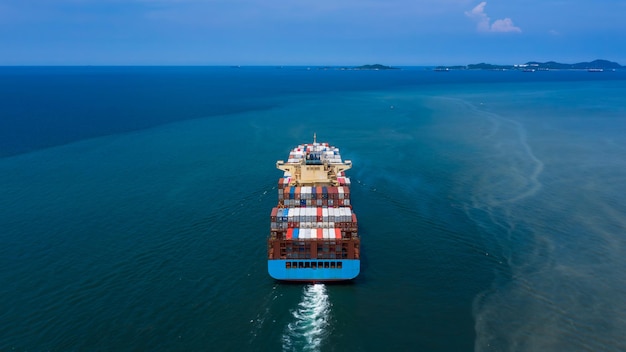
Ever wondered how the massive cargo ships crossing oceans drive the world’s economy?
Ocean freight logistics is not just a method of moving goods; it’s the backbone of global trade success.
From the initial export haulage to customs clearance and final ocean transit, every step plays a crucial role in ensuring that products reach markets on time. In 2022, approximately 90% of global trade by volume was transported by sea, illustrating the essential role of ocean freight in the worldwide economy, according to the International Maritime Organization.
In this article, we’ll dive deep into the intricacies of ocean freight logistics, exploring its importance and the complexities that define this vital industry.
Understanding Ocean Freight Logistics
Ocean freight logistics plays a crucial role in global trade, facilitating the transport of goods over long distances using large cargo vessels.
The process encompasses several steps vital for ensuring successful shipments:
- Export Haulage: Transportation of goods from the seller’s location to the port.
- Customs Clearance: Securing the necessary permits and documentation to legally ship goods across international borders.
- Ocean Freight Transit: This phase can take anywhere from 20 to 60 days, depending on various factors such as distance and transit routes. In fact, on average, containers take about 30 days to reach their destination ports, according to an analysis by the World Bank.
- Import Customs Clearance: The process of clearing goods through customs at the destination port.
- Destination Handling and Import Haulage: Demands organizing the pickup and delivery of goods to the final destination.
Essential documentation is crucial throughout this process. Key documents include:
- Bill of Lading (B/L): A contract between the shipper and carrier, confirming receipt of goods.
- Commercial Invoice: Lists the goods and their value for customs purposes.
- Packing List: Provides details on the contents and packaging for shipping.
Understanding these aspects of ocean freight logistics not only optimizes shipping efficiency but is also fundamental for businesses engaging in international shipping by sea. By grasping the entire shipping process, organizations can mitigate delays and enhance the reliability of their supply chains.
Key Terms in Ocean Freight Logistics
Understanding the key terms in ocean freight logistics is crucial for navigating the complexities of shipping processes.
Full Container Load (FCL) refers to a shipment that fills an entire shipping container. This option is generally more cost-effective for larger shipments and allows for direct transit without the need for additional handling.
Less than Container Load (LCL) is used for smaller shipments that do not occupy a full container. In this scenario, multiple shipments are consolidated into one container, which can be more economical for businesses with lower shipping volumes.
Incoterms are critical in defining the responsibilities of buyers and sellers in international shipping. Common terms include:
- FOB (Free on Board): The seller’s responsibility ends once the goods are loaded onto the vessel.
- EXW (Ex Works): The buyer assumes responsibility from the seller’s premises, encompassing all costs and risks.
- DDP (Delivery Duty Paid): The seller is responsible for all costs and liabilities until the goods reach the buyer’s location.
Demurrage fees are charges applied when containers are not loaded or unloaded within the agreed free time. These fees can significantly increase overall shipping costs if delays occur.
Key documentation in ocean freight logistics includes:
- Bill of Lading (B/L): A legal document signifying the receipt of goods by the carrier.
- Commercial Invoice: An itemized list of goods shipped, including values and terms of sale.
- Packing List: Detailed outline of items in the shipment, aiding in customs and delivery accuracy.
Understanding these terms enhances strategic decision-making in ocean freight logistics, enabling businesses to manage their shipping processes more effectively.
Types of Ocean Freight Services
Ocean freight services fall primarily into two categories: Full Container Load (FCL) and Less than Container Load (LCL).
Full Container Load (FCL)
FCL is suited for shipments that can fill an entire container, typically 20 or 40 feet.
Advantages:
- Cost-effective for large shipments
- Fewer handling risks due to dedicated container usage
- Greater security for valuable cargo
Suitable For:
Large businesses or those with high shipment volumes wanting to optimize shipping costs.
Less than Container Load (LCL)
LCL is ideal for smaller shipments that do not require a full container.
Advantages:
- Flexibility in shipping smaller quantities
- Lower costs for businesses not shipping full containers
Suitable For:
Small to medium-sized enterprises (SMEs) looking to manage costs while still utilizing ocean freight logistics.
Additional Services
In addition to FCL and LCL, other ocean freight options include:
- Dry Bulk Shipping: Used for transporting unpackaged bulk cargo like grain or coal.
- Roll on/Roll off (RORO): Designed for wheeled cargo, such as cars and trucks, that can be driven on and off the vessel.
These services cater to various cargo types, further expanding options for businesses.
Summary of Options
| Service Type | Advantages | Best For |
|---|---|---|
| Full Container Load (FCL) | Cost-efficient for large shipments; reduced handling risks | Large businesses with high volumes |
| Less than Container Load (LCL) | Cost-effective for smaller shipments; flexible shipping | SMEs and businesses with lower shipment volumes |
| Dry Bulk Shipping | Efficient for transporting bulk materials | Industries dealing with bulk goods |
| Roll on/Roll off (RORO) | Easy loading/unloading of wheeled cargo | Transporting vehicles and related machinery |
Through these services, businesses can select the best fit for their shipping needs, optimizing costs and ensuring effective logistics management.
Factors Affecting Ocean Freight Rates
Ocean freight rates are influenced by a variety of factors, which can lead to fluctuations in shipping costs. Understanding these elements is crucial for businesses aiming to optimize their logistics budgets.
Key factors include:
- Fuel Costs: Fluctuations in oil prices directly impact freight rates, as shipping lines often pass these costs onto customers.
- Packaging Size: The dimensions and weight of shipments affect the space utilized in shipping containers, influencing costs.
- Exchange Rates: Variations in currency values can significantly alter shipping expenses, especially in international transactions.
- Supply and Demand: Market dynamics dictate rates; high demand for shipping services typically results in increased prices, while decreased demand can lower costs. According to a report by the International Chamber of Shipping, global shipping demand is expected to grow by approximately 4% annually until 2025.
Generally, ocean freight rates hover around $0.50 per kg but can vary widely under different market conditions.
To manage and reduce shipping costs effectively, businesses can consider the following strategies:
- Consolidation: Combining smaller shipments into a single larger shipment can reduce overall costs.
- Negotiation: Establishing relationships with freight forwarders may yield better rates.
- Advanced Planning: Booking shipments in advance allows for negotiating lower rates, as carriers often incentivize early reservations.
The use of a shipping cost calculator can also help businesses estimate and compare potential costs effectively, enabling better decision-making regarding logistics strategies.
The Role of Freight Forwarders in Ocean Freight Logistics
Freight forwarders serve as essential intermediaries in ocean freight logistics, connecting shippers with carriers to facilitate efficient cargo transportation. Their primary role involves managing logistics, customs documentation, and overall supply chain processes, ensuring goods move seamlessly from point A to point B.
Freight forwarders offer a range of services, including:
- Coordinating shipments and consolidating cargo to optimize space and reduce costs
- Handling customs clearance and ensuring compliance with international regulations
- Providing insurance and risk management solutions to protect shipments
- Offering real-time tracking and communication regarding shipment status
The expertise provided by freight forwarders helps mitigate risks associated with cargo delays, damage, or loss, ultimately ensuring smoother transit processes. They possess detailed knowledge of shipping routes, carrier capabilities, and local regulations that are crucial for effective logistics management.
When selecting a freight forwarder, businesses should consider several key factors:
- Shipping Volume: Evaluate the amount and frequency of shipments to determine the forwarder’s capability to meet your needs.
- Type of Cargo: Some forwarders specialize in specific types of goods; selecting one with experience handling your merchandise is vital.
- Transit Time Requirements: Understand your delivery timelines and choose a forwarder capable of meeting those expectations.
- Reputation and Reviews: Research freight forwarders for customer feedback and industry reputation to ensure reliability.
By carefully assessing these considerations, businesses can select the right freight forwarder that aligns with their shipping requirements and contributes to a more efficient ocean freight logistics operation.
Future Trends in Ocean Freight Logistics
Emerging trends in ocean freight logistics illustrate a significant shift towards integrating advanced technology for enhancing shipment tracking and management. The use of real-time data analytics and IoT devices is revolutionizing how carriers monitor cargo throughout transit, ensuring transparency and efficiency.
Sustainability practices are becoming a priority, with many shipping companies adopting eco-friendly solutions to minimize their carbon footprints. This includes investing in fuel-efficient ships, exploring alternative energy sources, and optimizing routing for reduced emissions. According to the Global Maritime Forum, shipping companies aim to reduce carbon emissions by at least 50% by 2050 as part of the industry’s commitment to the International Maritime Organization’s greenhouse gas strategy.
Additionally, evolving regulations are impacting shipping processes worldwide. Increased compliance requirements relating to environmental standards and safety protocols necessitate continual updates to logistics strategies. The effects of COVID-19 on global supply chains have prompted a reevaluation of risk management and inventory strategies, encouraging companies to become more agile in their operations.
Here are key areas reflecting the shift in ocean freight logistics:
- Technology Adoption
- Real-time shipment tracking
- IoT integration for asset management
- Data analytics for efficiency optimization
- Sustainability Initiatives
- Fuel-efficient vessels
- Alternative energy adoption
- Emission reduction strategies
- Regulatory Changes
- Stricter environmental compliance
- Updates in safety standards
- Adaptation to changing tariffs and trade agreements
These trends indicate a dynamic and evolving landscape in ocean freight logistics, driven by the need for improved efficiency, accountability, and sustainability. Understanding the nuances of ocean freight logistics is essential for navigating the complexities of global trade.
This blog post covered critical aspects, from the shipping process and key terminology to the various freight services available and the factors impacting ocean freight logistics rates.
Freight forwarders play a pivotal role in ensuring seamless logistics, while future trends highlight the industry’s shift toward technology and sustainability.
With the right knowledge and partnerships, businesses can optimize their shipping strategies and embrace the evolving landscape of ocean freight logistics.
The potential for growth and efficiency in this sector remains promising.
FAQ
Q: What is ocean freight logistics?
A: Ocean freight logistics involves transporting goods over long distances using large cargo ships, playing a key role in global trade and the movement of large quantities of goods.
Q: What are the different types of ocean freight services?
A: Ocean freight services primarily include Full Container Load (FCL) for entire containers and Less than Container Load (LCL) for smaller shipments. Other options are Dry Bulk Shipping and Roll on/Roll off (RORO).
Q: What determines ocean freight rates?
A: Ocean freight rates are influenced by factors such as fuel costs, package size, exchange rates, and market demand, typically averaging around $0.50 per kg.
Q: What are common terms in ocean freight logistics?
A: Key terms include Bill of Lading (B/L), FCL, LCL, and Incoterms like FOB, EXW, and DDP, which define shipping responsibilities and cost liabilities.
Q: What is the role of freight forwarders in ocean freight logistics?
A: Freight forwarders serve as intermediaries, managing logistics, customs, and documentation, optimizing the shipping process and reducing risks for shippers.
Q: What are the benefits and drawbacks of ocean freight?
A: Benefits include lower costs and handling large quantities of cargo; drawbacks involve longer shipping times and potential delays due to external factors such as weather or customs.
Q: When is it appropriate to select ocean freight?
A: Ocean freight is ideal for large, bulky shipments when cost minimization is crucial, provided that flexibility in delivery timelines is acceptable.