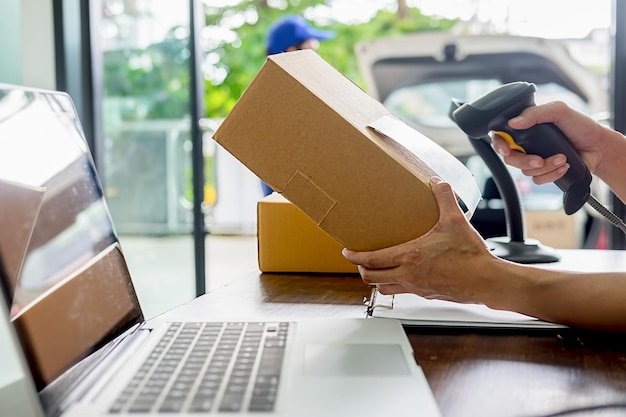
Is your order fulfillment process helping your e-commerce business grow, or is it creating friction after the sale? In today’s fast-moving ecommerce environment, the way orders are processed, packed, shipped, and returned has a direct impact on customer satisfaction, repeat purchases, and brand trust.
Order fulfillment is not just a back-end warehouse task. It is a core part of ecommerce operations that influences delivery speed, order accuracy, return handling, and the overall post-purchase experience. When the process works well, it supports profitability and loyalty. When it breaks down, even a strong online store can lose customers because of delays, stock issues, or poor communication.
This end-to-end guide explains what order fulfillment means in e-commerce, how the process works, which fulfillment methods businesses use, what challenges are most common, and which technologies and best practices can improve performance over time.
What Is the Order Fulfillment Process?
The order fulfillment process is the full sequence of actions a business takes to receive, process, pick, pack, ship, deliver, and, when needed, manage the return of customer orders. In retail and e-commerce, this process directly affects customer satisfaction, operational efficiency, and long-term business performance.
Order fulfillment is closely tied to inventory management, warehouse workflows, shipping coordination, and customer communication. In practical terms, it is the operational system that turns a completed checkout into a delivered order. Businesses that want a broader overview of how this function supports online growth can also explore ecommerce fulfillment as a wider strategic discipline.
Understanding order fulfillment meaning in business is important because it shows how closely logistics, service quality, and customer retention are connected. A streamlined process helps optimize resources, reduce avoidable errors, and create a stronger brand experience.
Why Order Fulfillment Matters in E-Commerce
In e-commerce, fulfillment affects far more than shipping speed. It influences whether customers receive the right products, whether delivery expectations are met, whether returns are handled smoothly, and whether the buying experience feels reliable from beginning to end.
Efficient fulfillment can improve customer satisfaction, reduce support workload, and protect margins by lowering shipping mistakes, stock problems, and unnecessary operational costs. Poor fulfillment, on the other hand, can lead to negative reviews, more refunds, higher churn, and lost trust in the online store.
That is why order fulfillment should be treated as an essential ecommerce capability rather than a secondary operational task.
Key Steps in the Order Fulfillment Process
The order fulfillment process consists of several connected stages that help ecommerce businesses deliver products accurately and on time. Different businesses may describe the workflow in six broad stages or in a more detailed eight-step sequence, but the core logic remains the same: receive the order, confirm stock, prepare it correctly, ship it, and handle any post-delivery issues.
- Receiving Orders: Orders are placed through an online store, marketplace, or another sales channel and then captured by the business system.
- Processing Orders: The order is reviewed for payment confirmation, customer details, fraud checks, and operational readiness.
- Inventory Management: Stock levels are checked so the correct items can be allocated and prepared.
- Picking: The ordered items are selected from inventory or warehouse storage.
- Packing: Items are packed securely, labeled correctly, and prepared for dispatch.
- Shipping: The package is handed off to the chosen carrier for delivery.
- Delivery and Tracking: The customer receives shipment updates and the parcel is delivered.
- Returns Processing: Returned items, exchanges, and refunds are handled when needed.
Below is a closer look at the main stages most ecommerce businesses manage on a daily basis.
Receiving Orders
The process begins with receiving the order details from an ecommerce platform or sales channel. This stage involves confirming the order, checking for errors, and making sure all key information is available for processing. Any issue at this point—such as an address problem, failed payment, or product mismatch—can slow down the entire fulfillment workflow.
Inventory Management
Once the order is received, effective inventory management comes into play. The business must confirm that the required items are actually available and can be allocated without creating stock conflicts elsewhere. Proper inventory control reduces stockouts, improves accuracy, and supports a more reliable e-commerce order flow.
Picking
The picking step involves selecting the correct items from storage based on the customer’s order. Employees may use manual picking lists, barcode systems, or digital warehouse tools to reduce errors and improve speed. This stage becomes especially important as order volume grows and fulfillment operations become harder to manage manually.
Packing
After items are picked, they need to be packed securely for shipment. This includes choosing the right packaging, protecting items from damage, and labeling parcels correctly. In a growing online store, packing efficiency is often easier to maintain when products and workflows are organized around a dedicated fulfillment center setup.
Shipping
Shipping is the stage in which packed orders are dispatched to customers through selected carriers. This part of the process includes carrier coordination, shipment creation, dispatch timing, and delivery expectations. Accurate shipping execution has a major effect on customer satisfaction because it determines whether promised delivery windows are met.
Returns Handling
Returns handling is a critical part of fulfillment because it shapes the post-purchase experience. It includes product return requests, inspection of returned items, exchanges, replacements, and refunds. Efficient returns processing can reduce friction for customers and help protect the brand even when an order does not go as planned.
| Step | Description |
|---|---|
| Receiving | Confirming order details and checking for errors. |
| Inventory Management | Checking stock levels and ensuring product availability. |
| Picking | Selecting items from the warehouse or storage location. |
| Packing | Securing items for shipment and labeling parcels correctly. |
| Shipping | Distributing packed orders to customers through chosen carriers. |
| Returns Handling | Managing returns, replacements, exchanges, or refunds. |
Understanding these steps helps ecommerce businesses optimize operations, improve accuracy, and create a stronger customer experience across the full fulfillment cycle.
Types of Order Fulfillment Methods
The main types of order fulfillment methods include in-house fulfillment, outsourced fulfillment, dropshipping, and hybrid fulfillment. Each approach has different operational implications for e-commerce businesses, and the best option depends on order volume, margins, product characteristics, internal resources, and growth stage.
In-House Fulfillment
In-house fulfillment means the company manages the entire order fulfillment process within its own facilities using its own team and systems.
Pros:
- Greater control over inventory and order processing
- Customizable to match specific operational needs
- Enhanced quality assurance and brand control
Cons:
- Higher operational costs
- Requires staffing, training, and internal management
- Can be harder to scale during rapid growth
Best Used When: In-house fulfillment is often effective for established ecommerce businesses with predictable order volumes, tighter packaging requirements, or a strong need for quality control.
Outsourced Fulfillment
Outsourced fulfillment refers to working with a third-party provider that handles storage, packing, and shipping on behalf of the business. For many brands, this becomes more attractive when order volume increases and logistics starts consuming too much internal time and cost. Businesses comparing external support models can review different order fulfillment services to see how outsourcing changes scalability and operational workload.
Pros:
- Cost savings on warehousing and labor
- Access to logistics expertise and established infrastructure
- Scalability during seasonal peaks or business growth
Cons:
- Less direct control over daily fulfillment operations
- Possible communication challenges with third-party partners
- Risk of service inconsistency if the provider is poorly matched
Best Used When: This method is often ideal for small to medium-sized ecommerce businesses that want to reduce operational burden while scaling.
Dropshipping
Dropshipping allows retailers to sell products without keeping inventory on hand. Instead, the retailer forwards the order to a supplier after the sale, and the supplier ships the product directly to the customer.
Pros:
- Low startup costs and reduced inventory risk
- No need to manage physical stock directly
- Ability to offer a wider product assortment
Cons:
- Lower profit margins due to supplier markups
- Dependence on supplier stock accuracy and shipping reliability
- Potential for longer delivery times and weaker brand control
Best Used When: Dropshipping is commonly used by ecommerce startups testing demand or expanding product range without heavy inventory investment.
Hybrid Fulfillment
Hybrid fulfillment combines two or more fulfillment methods, such as managing best-selling products in-house while outsourcing slower-moving items or using dropshipping for selected categories.
Pros:
- Can be tailored to different business needs
- Offers flexibility across product types and order profiles
- Balances control with scalability and cost-effectiveness
Cons:
- More complex to manage operationally
- Requires stronger system coordination and process clarity
- May introduce inefficiencies if workflows are not aligned
Best Used When: Hybrid fulfillment is beneficial for ecommerce businesses in growth mode that need adaptability across multiple product or delivery scenarios.
Challenges in the Order Fulfillment Process
Common challenges in the order fulfillment process include demand forecasting, inventory management, logistics planning, and labor shortages. Each of these can affect a business’s ability to meet customer expectations while controlling costs and maintaining consistency.
- Demand Forecasting: Accurate forecasting is essential for having the right products available when customers place orders. Poor forecasting can lead to overstock, stockouts, markdown pressure, and missed revenue. Using data and trend analysis can improve forecasting accuracy.
- Inventory Management: Effective inventory management helps minimize carrying costs and maintain healthy stock levels. Weak stock control often causes overselling, delayed orders, and lost trust in the ecommerce experience.
- Logistics Planning: Logistics planning includes transportation, storage coordination, dispatch timing, and carrier management. Inefficient logistics can increase costs and create delivery delays that damage customer satisfaction.
- Labor Shortages: Finding and retaining skilled staff for picking, packing, and warehouse operations can be difficult, especially during seasonal peaks. Labor shortages often lead to slower processing and more operational errors.
These challenges are common across both small and large e-commerce operations, which is why fulfillment improvement usually requires both process discipline and better operational visibility.
Innovations in Order Fulfillment Technology
Recent advancements in technology have significantly transformed the order fulfillment landscape, creating opportunities for better efficiency, higher accuracy, and stronger scalability in ecommerce operations. Businesses no longer rely only on manual processes to manage warehouse workflows and shipment coordination.
One of the most important shifts is the move toward automated order fulfillment, which helps reduce repetitive manual work, improve speed, and lower error rates. Automation can support order routing, picking validation, barcode workflows, shipping label creation, and operational updates across the fulfillment cycle.
Warehouse management systems (WMS) also play a major role in improving fulfillment. They help businesses track inventory in real time, manage stock locations, and make better operational decisions based on current data. These systems become increasingly valuable as e-commerce businesses grow and order volume becomes harder to control manually.
In addition, technologies such as robotic process automation (RPA), automated sorting, AI-supported forecasting, and operational analytics can help businesses predict demand, allocate resources more effectively, and improve the overall customer experience.
Order Fulfillment Software and Platforms
Order fulfillment software is becoming essential for ecommerce businesses that want to streamline operations across inventory, orders, warehouse activity, and shipping. Without connected systems, the fulfillment process often becomes fragmented, making it harder to scale and harder to measure.
A strong fulfillment platform can help businesses centralize inventory visibility, coordinate order flow, and connect operational data across multiple sales channels. This is especially useful for online stores that want cleaner process control as they grow.
Best Practices for an Efficient Order Fulfillment Process
To improve fulfillment efficiency in e-commerce, businesses should focus on practical operational improvements that reduce error, support speed, and make the process easier to manage consistently.
- Automate Order Management
Use automation tools to streamline order processing. Automating tasks such as order entry, acknowledgments, stock syncing, and shipment creation can reduce errors and speed up operations. - Optimize Warehouse Layout
Arrange inventory logically to reduce picker travel time. Grouping frequently ordered products together can improve productivity and lower labor cost. - Maintain Accurate Inventory Records
Update inventory levels consistently with real-time or near-real-time systems. This helps reduce stockouts, overstocks, and order exceptions. - Implement Fulfillment Performance Indicators
Track order accuracy, shipping times, inventory turnover, and related performance indicators so teams can identify where the process needs improvement. - Enhance Communication
Clear communication between teams, carriers, suppliers, and customers is critical. Timely order status updates improve customer confidence and reduce support pressure. - Leverage Customer Feedback
Use post-purchase feedback to identify pain points in shipping, delivery, packaging, and returns. This can reveal issues that are not obvious from internal reports alone. - Focus on Order Fulfillment Metrics
Track metrics such as average order processing time, return rate, shipping accuracy, and cost per order. These indicators make it easier to improve fulfillment with data rather than assumptions.
By investing in these actionable strategies, ecommerce businesses can improve order fulfillment, reduce avoidable costs, and create a more consistent customer experience.
Key Order Fulfillment Metrics and KPIs
To understand whether fulfillment is truly improving, businesses need measurable indicators. Fulfillment metrics help connect operational activity with real ecommerce outcomes such as customer satisfaction, repeat purchase potential, and cost control.
- Order Accuracy Rate – shows how often customers receive exactly what they ordered.
- Average Order Processing Time – measures how quickly an order moves from placement to shipment readiness.
- Shipping Time – tracks how fast an order is dispatched and delivered.
- Inventory Turnover – helps evaluate how efficiently stock is moving through the business.
- Stockout Frequency – shows how often customers encounter unavailable products.
- Return Rate – indicates how often orders come back and can reveal product or fulfillment issues.
- Cost per Fulfilled Order – helps assess the financial efficiency of the fulfillment operation.
Monitoring these metrics regularly helps ecommerce teams make better decisions about staffing, warehouse design, software, shipping methods, and outsourcing.
How to Improve Order Fulfillment Over Time
Improving fulfillment is rarely about one single change. In most e-commerce businesses, progress comes from fixing the largest bottleneck first, whether that bottleneck is stock accuracy, warehouse layout, manual processing, poor carrier coordination, or weak returns handling.
Businesses that improve over time usually focus on three things: clearer workflows, better systems, and consistent measurement. That combination helps make the fulfillment process more reliable, scalable, and easier to manage as the ecommerce business grows.
Related Order Fulfillment Guides
If you want to go deeper into specific parts of this e-commerce topic, these guides are the most relevant next steps within the same hub:
- Warehouse Fulfillment Center Revolutionizes E-commerce Efficiency
- Fulfillment Service Provider Boosts Your Business Efficiency
- Direct to Consumer Fulfillment Enhances Customer Satisfaction
- Fulfillment Services for Small Business Boost Growth Potential
Related Hubs (Operations, Logistics & Post-Purchase)
If you are working on broader ecommerce operations, these hubs connect directly to order fulfillment decisions:
- Inventory Management – stock accuracy directly affects order allocation, picking, packing, and fulfillment speed.
- Shipping Strategies – carrier selection, delivery methods, and shipping promises influence fulfillment cost and customer expectations.
- Logistics Partners – 3PL and logistics partner choices shape outsourced fulfillment workflows, warehousing, and service reliability.
- Logistics Optimization – process design, routing, and operational analytics help improve fulfillment efficiency and reduce delays.
- Return Policy – return rules and customer communication affect reverse logistics, refunds, and the post-purchase experience.
- Operational Efficiency – fulfillment performance is closely tied to labor productivity, process consistency, and KPI-driven improvement.
FAQ
What is order fulfillment?
Order fulfillment is the process of receiving, processing, picking, packing, shipping, delivering, and, when needed, handling returns for customer orders. In e-commerce, it directly affects customer satisfaction and business performance.
What are the four types of order fulfillment?
The four main types are in-house fulfillment, outsourced fulfillment, dropshipping, and hybrid fulfillment. Each model serves different ecommerce needs depending on scale, control, and operational complexity.
Why is order fulfillment important?
Effective order fulfillment improves delivery speed, order accuracy, post-purchase satisfaction, and customer loyalty. It also helps ecommerce businesses control errors, returns, and operational costs.
What are the steps in the order fulfillment process?
The process is often described through six broad stages—receiving, inventory management, picking, packing, shipping, and returns handling—or through a more detailed eight-step model that also separates order processing and delivery tracking.
What are best practices for optimizing order fulfillment?
Best practices include automating repetitive tasks, improving warehouse layout, maintaining accurate inventory records, tracking fulfillment KPIs, strengthening communication, and using customer feedback to identify weak points.
What challenges are faced in order fulfillment?
Key challenges include demand forecasting, inventory management, logistics planning, labor shortages, and the complexity of scaling operations while maintaining service quality.
How can technology improve order fulfillment?
Technology can improve fulfillment through automation, warehouse management systems, better tracking, stronger data visibility, and AI-supported forecasting, all of which help ecommerce businesses improve efficiency and accuracy.